Bareboat vs Skippered Charter on the Great Lakes
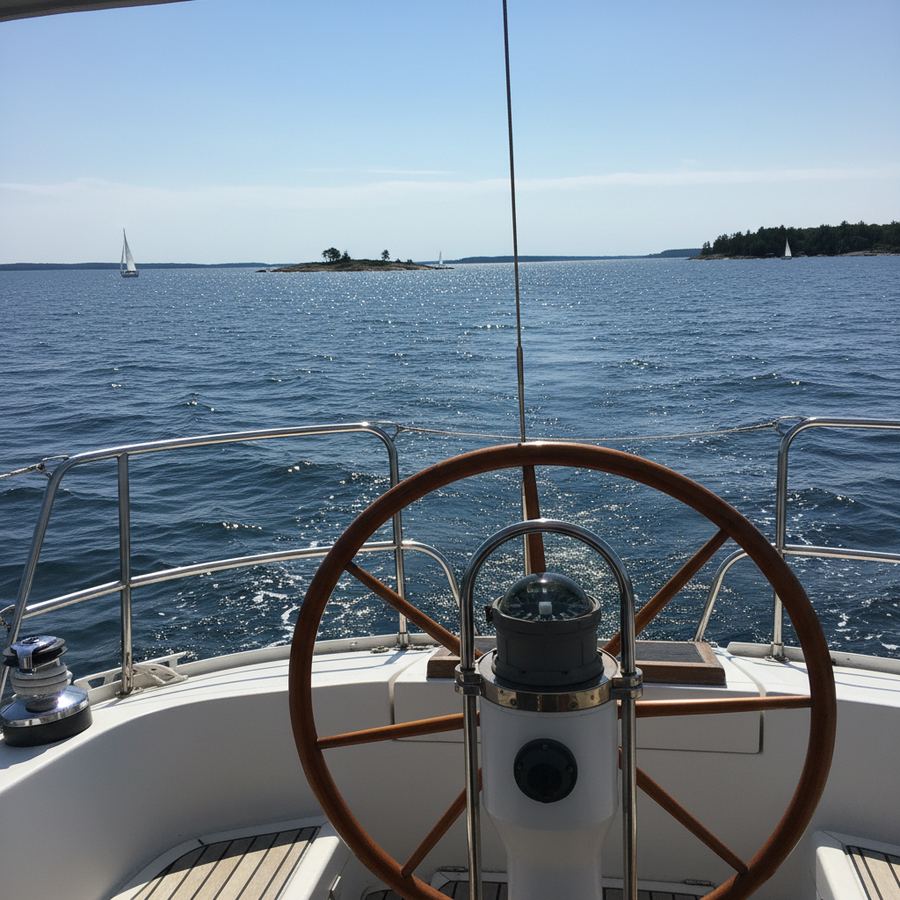
Every charter company on the Great Lakes gets this question: should we go bareboat or hire a skipper? The answer depends on your sailing experience, your comfort with navigation in unfamiliar waters, and honestly, what kind of vacation you're after. The two options create very different trips.
Bareboat: You're the Captain
A bareboat charter means you take the boat out on your own. No skipper, no crew, no one looking over your shoulder. You make every decision: where to go, when to leave, how to anchor, what to do when the weather turns. The charter company hands you the keys after a checkout briefing, and from that point the boat and the trip are your responsibility.
This is the format most experienced sailors prefer. The freedom is the entire point. You can change your itinerary on a whim, stay an extra night in an anchorage you love, or push on to the next harbour if you're restless. Nobody else's schedule or preferences interfere. If you've dreamed of exploring the 30,000 Islands of Georgian Bay at your own pace, bareboat is how you do it.
The tradeoff is that everything falls on you. Navigation on Georgian Bay requires constant attention. The eastern shore is a maze of rock, shoal, and unmarked hazards. Charts are essential and must be read carefully. GPS alone is not sufficient in areas where rocks sit just below the surface between waypoints. Anchoring often involves stern lines to shore. And if something breaks at 6 PM in an anchorage with no cell service, you're the one who fixes it or figures out the next step.
Canadian Licensing Requirements
To charter bareboat in Canadian waters, you need a Pleasure Craft Operator Card (PCOC). This is a federal requirement for anyone operating a motorized vessel in Canada, including sailboats with auxiliary engines, which covers essentially every charter boat.
The PCOC is obtained by passing a Transport Canada accredited boating safety exam. It's a knowledge test covering navigation rules, safety equipment requirements, and basic seamanship. The test can be taken online and costs around $50. It is not a skills test and does not prove you can actually handle a boat.
Charter companies know this, which is why they also require a sailing resume. Most operators want to see evidence of offshore or coastal experience, familiarity with boats of similar size, and ideally some Great Lakes time. An ASA 104 or equivalent certification helps, but logged hours and specific experience matter more. If you've sailed a 28-footer on a lake but never handled a 38-footer in open water with 4-foot seas, expect the charter company to ask questions.
Some operators will require a short skills checkout before handing over the boat, regardless of your paperwork. Don't take this personally. Georgian Bay has a reputation for chewing up overconfident sailors, and the charter company's boat is on the line.
Skippered: Someone Else Drives
A skippered charter means a professional captain comes with the boat. They handle navigation, docking, anchoring, and all the seamanship decisions. You're free to participate as much or as little as you want, from actively trimming sails to sitting in the cockpit with a book.
This option makes sense for several situations. If you don't have the required experience for bareboat, a skippered charter lets you get on the water without pretending to be something you're not. If you're bringing a group of non-sailors (a family reunion, a corporate retreat, a group of friends), a skipper means everyone can relax. And if you're new to the Great Lakes and want to learn the waters before chartering bareboat next time, a week with an experienced local skipper is the best possible education.
The downside is that you give up autonomy. You have a stranger on your boat for the entire trip. A good skipper reads the group and stays out of the way socially while managing the boat competently. A mediocre one can make the trip feel like a guided tour you didn't ask for. Ask the charter company about their skippers specifically. How long have they been on these waters? Do they know the area you want to cruise? Do previous clients come back?
Cost Comparison
A bareboat charter on the Great Lakes runs roughly $3,500 to $6,500 CAD per week depending on the boat. A skippered charter adds $250 to $400 per day for the captain. Over a week, that's $1,750 to $2,800 extra. You'll also typically cover the skipper's food and drink, though not always their accommodation since they'll sleep on the boat.
So a one-week skippered charter on a mid-range boat might cost $6,000 to $9,000 total before fuel, marina fees, and provisions. The same boat bareboat is $4,000 to $7,000 all-in. The difference is meaningful but not enormous when split among four to six people on board.
For a full breakdown of what to expect cost-wise, our article on what a Great Lakes charter is actually like goes into more detail.
A Middle Option: Skipper for the First Day
Some charter companies offer a compromise: hire a skipper for the first day or two, then continue bareboat. This works well if you have solid sailing skills but zero local knowledge. The skipper shows you how to read the charts for the area, walks you through anchoring technique on Georgian Bay rock, demonstrates the shoal-avoidance approach that keeps boats off the bottom, and then leaves you to it.
This option typically costs $300 to $500 total and is some of the best money you can spend on a first-time Great Lakes charter. The alternative is spending your first two days overly cautious and anxious, which eats into the trip more than the cost of a day skipper.
When Bareboat Makes Sense
- You have real sailing experience on boats of similar size
- You've studied the cruising area and have proper charts
- Everyone on board is comfortable with the responsibility
- You want maximum freedom and solitude
- You hold a valid PCOC and can demonstrate a strong sailing resume
When Skippered Makes Sense
- You're new to sailing or have limited experience
- Your group includes non-sailors who want to relax
- You want to learn the Great Lakes before going bareboat
- You'd rather focus on the scenery than the navigation
- You want someone with local knowledge picking the anchorages
Making the Decision
Be honest with yourself. Georgian Bay and the North Channel are not beginner waters. The rocks are real, the weather changes fast, and help can be far away. If you have any doubt about your ability to handle the boat and the conditions safely, hire a skipper. There's no shame in it, and the trip will be better for everyone aboard.
If you do go bareboat, prepare thoroughly. Read the planning guide and study the chart books before you arrive. Talk to the charter company about your intended route. Carry paper charts even if you have electronic. And leave margin in your schedule for weather days. The Great Lakes reward careful sailors and punish careless ones. The gap between a fantastic trip and a miserable one often comes down to preparation, not luck.
Browse our cruising guides for route ideas and area-specific advice once you've decided which format suits your crew.