Georgian Bay: Cruising, Islands, and Harbour Towns
Georgian Bay is a body of water that people underestimate until they see it. Roughly 190 kilometres long and up to 80 wide, it holds about a fifth of the water in Lake Huron. Its eastern shore is a maze of 30,000 islands. Its western shore drops off into deep, cold water against the limestone cliffs of the Bruce Peninsula. In between is some of the finest cruising water in North America, and most people outside Ontario have never heard of it.
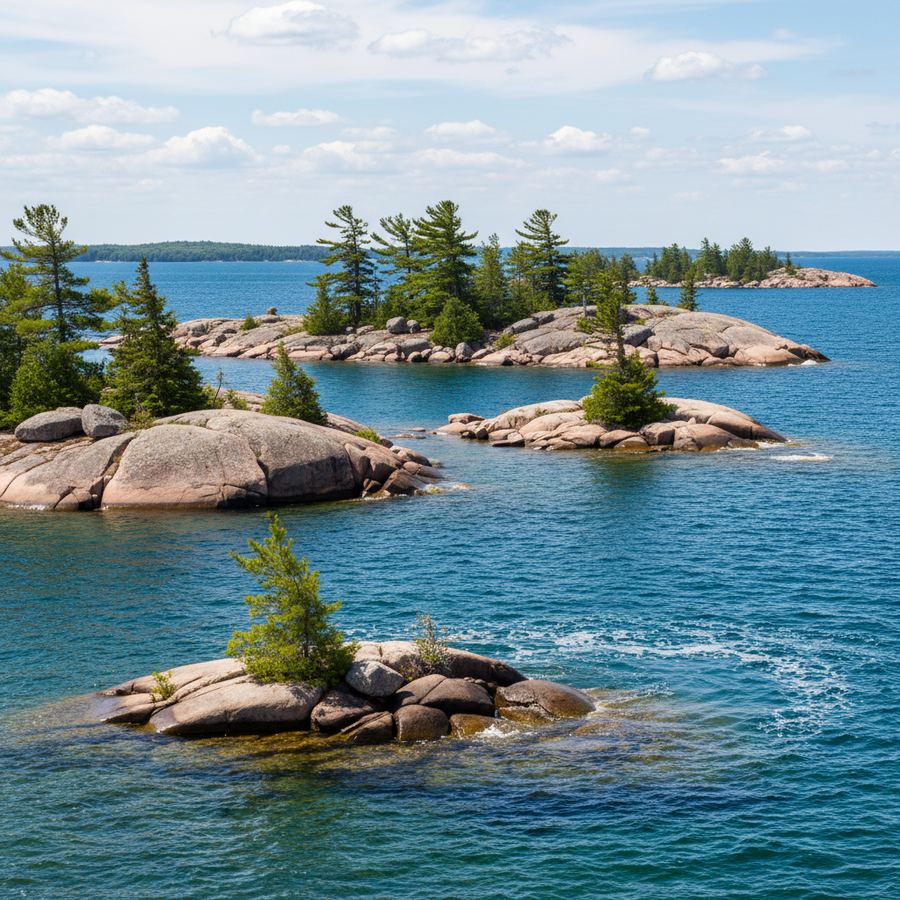
The 30,000 Islands
The number is not an exaggeration. The eastern shore of Georgian Bay, from Severn Sound north to the French River, is one of the largest freshwater archipelagos on Earth. The islands range from bare rock shelves barely above the waterline to forested islands with cottages, lighthouses, and their own micro-harbours. Navigating through them requires good charts and constant attention. The rock is Precambrian Shield granite, and it does not forgive contact.
For cruisers, this is the main draw. You can anchor behind a windswept island in a spot that feels completely wild, with the nearest road 20 kilometres away, and still be within a day's sail of a fully serviced marina. That combination of wilderness and accessibility is what sets Georgian Bay apart from places like the North Channel or the coast of Newfoundland.
Key Harbours and Towns
Penetanguishene and Midland anchor the southern end of the bay. These are the gateway towns for most charter operations and the starting point for cruises heading north through the islands. Penetanguishene has the deeper harbour history, going back to a British naval base established in 1817. Midland has the bigger population and better provisioning. Between them, you can get everything you need before heading out.
Parry Sound is the next major harbour heading north, about 40 nautical miles up the inside passage. It sits in a well-protected sound with good marina facilities, restaurants, groceries, and the Charles W. Stockey Centre for the performing arts. The Festival of the Sound brings classical music to the waterfront every summer.
Further north, the harbours get smaller. Byng Inlet, the Bustard Islands, and the French River Delta are destinations for more experienced cruisers who are comfortable with exposed anchorages and limited services. On the western shore, Owen Sound and Meaford offer more sheltered options with town amenities.
Weather and Conditions
Georgian Bay makes its own weather. The bay is large enough that thermal effects create afternoon winds that can build from calm to 20 knots in a couple of hours. Northwest winds in particular can build big seas across the open water, and the shoals and islands on the eastern shore cause steep, confused waves when the wind opposes the current.
Check the Environment Canada marine forecast before every passage. VHF weather channels broadcast continuously. The general rule is to make your open-water crossings in the morning when conditions are usually calmer, and plan to be in a harbour or behind an island by mid-afternoon if the forecast calls for anything above 15 knots. Georgian Bay rewards preparation and punishes overconfidence. That is not meant to scare anyone off. It is just how it works on a body of water this size.
Getting on the Water
If you have your own boat, the main launch points are Midland, Penetanguishene, Parry Sound, and Owen Sound. Each has public ramps and nearby marinas for seasonal or transient dockage. If you are looking to charter, the charter basics page covers what you need to know about renting a boat in this area.
For route ideas, our cruising guides break the bay into manageable sections with suggested itineraries. A good first trip is a week out of Midland heading north through the inside passage to Parry Sound and back, with stops at the Minks, Sans Souci, and Snug Harbour along the way. That gives you a taste of the islands without committing to the longer passages further north.
The Fathom Five National Marine Park at the tip of the Bruce Peninsula is also worth the trip if you are on the western side. The park protects 22 shipwrecks and the dramatic underwater topography of the Niagara Escarpment where it drops into the bay.
Why Georgian Bay
People who cruise here tend to come back. The combination of wild islands, clean water, interesting harbour towns, and real sailing conditions creates something that resort-style cruising grounds cannot match. You earn your anchorages on Georgian Bay. The navigation is demanding. The weather keeps you honest. And when you tuck into a quiet bay at the end of the day with the pines and granite all around you, it is hard to imagine being anywhere else. That is not marketing. It is just what happens when you spend time on this water.